

Every year on March 17, millions of people around the world celebrate Saint Patrick’s Day, a holiday honoring Ireland’s patron saint and the country’s rich cultural heritage. What began as a religious feast day has grown into a vibrant global celebration marked by parades, festivals, music, and plenty of green.
From iconic parades in cities like Dublin and New York to landmarks illuminated in green across the globe, Saint Patrick’s Day has evolved far beyond its Irish roots. People celebrate the holiday with traditional food, festive gatherings, and cultural events that showcase Irish pride.

How SwagMagic can help your brand?
- Bulk Buy & Save on your gifts!
- Curate Customized Swag Boxes!
- Launch Your Store for your employees!
- Secure Swag Storage with us!
In recent years, the celebration has also found its way into workplaces and communities, where organizations host themed events, team activities, or small celebrations to bring people together. Whether through cultural festivities, community gatherings, or simple traditions like wearing green, Saint Patrick’s Day continues to unite people around the world.
Table of contents
- The Life of Saint Patrick and His Legacy
- Why Saint Patrick’s Day Is Celebrated on March 17 ?
- Popular Saint Patrick’s Day Traditions
- How Saint Patrick’s Day Is Celebrated Around the World ?
- Symbols of Saint Patrick’s Day
- Fun Facts About Saint Patrick’s Day
- Celebrating Saint Patrick’s Day at Work
- SwagMagic: Your Corporate Gifting Partner
The Life of Saint Patrick and His Legacy
Saint Patrick is widely known as the patron saint of Ireland, but his story begins far from the island he later helped shape. Historians believe Patrick was born in Roman Britain in the late 4th century. As a teenager, he was kidnapped by Irish raiders and taken to Ireland, where he was forced into slavery and spent several years working as a shepherd.
During this time, Patrick turned deeply toward faith. According to historical accounts, he eventually escaped captivity and returned home. Years later, after studying Christianity and becoming a missionary, Patrick felt compelled to return to Ireland—this time voluntarily—to spread Christian teachings.
Patrick is credited with helping establish Christianity across Ireland by building churches, baptizing converts, and working with local communities. Over time, stories about his life blended history with folklore, contributing to the legend that surrounds him today.
One of the most well-known traditions associated with Saint Patrick is the shamrock. According to legend, Patrick used the three-leaf clover to explain the concept of the Holy Trinity—Father, Son, and Holy Spirit. While the story may be symbolic, the shamrock eventually became one of the most recognizable symbols of Irish identity and Saint Patrick’s Day celebrations.
Curate the perfect box of handpicked gift they’ll love and send joy their way

Why Saint Patrick’s Day Is Celebrated on March 17?
Saint Patrick’s Day is celebrated on March 17, the date traditionally believed to mark the death of Saint Patrick in the 5th century. Over time, this day became a religious observance dedicated to honoring his life and contributions to Christianity in Ireland.
For centuries, March 17 was observed primarily as a Christian feast day. In Ireland, the holiday was historically marked with church services and quiet family gatherings. Because the date falls during the Christian season of Lent, it also became a rare day when restrictions on food and celebration were temporarily lifted.
As Irish communities spread across the world through migration, especially during the 18th and 19th centuries, the meaning of the holiday gradually expanded. What began as a religious commemoration evolved into a broader celebration of Irish culture, heritage, and identity.
Today, Saint Patrick’s Day is recognized internationally with parades, festivals, and cultural events. Cities across North America, Europe, Asia, and Australia host celebrations that highlight Irish traditions, music, and cuisine—transforming March 17 into one of the most widely celebrated cultural holidays in the world.
Popular Saint Patrick’s Day Traditions
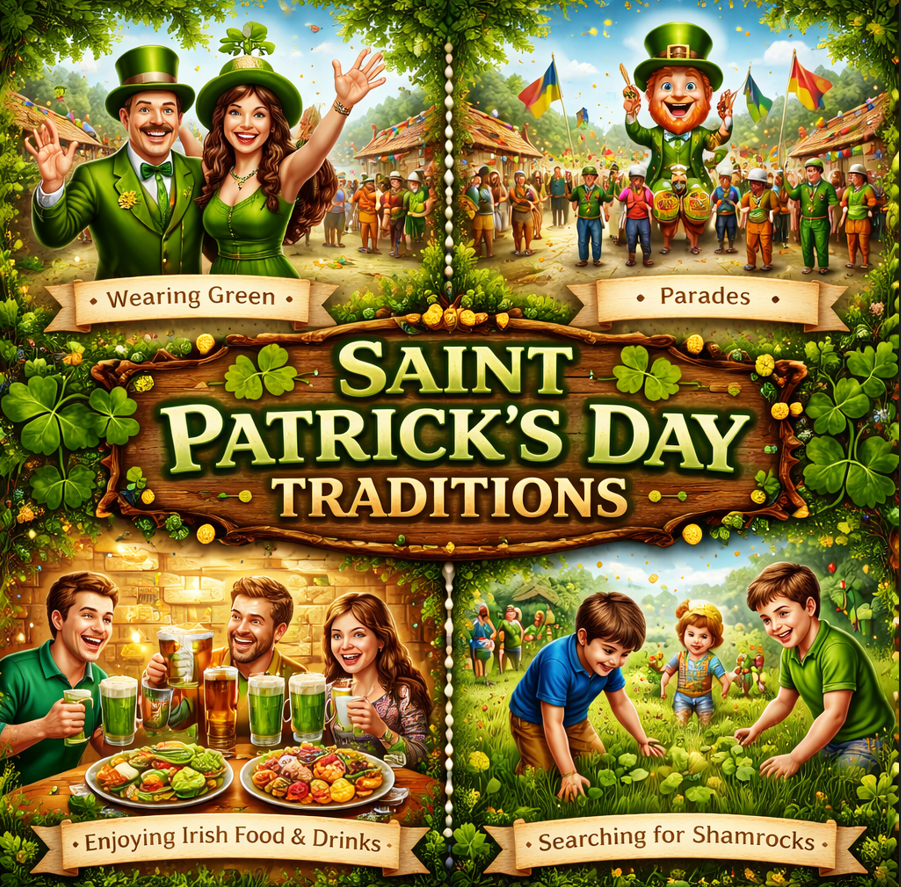
Over the years, Saint Patrick’s Day has developed a wide range of traditions that blend Irish history, folklore, and modern celebrations. From wearing green clothing to attending lively parades and enjoying traditional Irish meals, these customs help bring the spirit of the holiday to life.
While many traditions originated in Ireland, they have been embraced and adapted by communities around the world, making Saint Patrick’s Day one of the most widely celebrated cultural holidays globally.
Wearing Green
One of the most recognizable Saint Patrick’s Day traditions is wearing green. The color has long been associated with Ireland, which is often called the “Emerald Isle” because of its lush green landscapes. Over time, green became a symbol of Irish pride and national identity.
Another reason the color gained popularity is its connection to the shamrock, the three-leaf clover linked to Saint Patrick’s teachings. According to folklore, wearing green also makes people invisible to mischievous leprechauns, who are said to pinch anyone they can see.
Today, people celebrate by wearing green shirts, hats, scarves, or themed accessories. In workplaces and social gatherings, green-themed attire has become a simple and fun way to participate in the holiday. Some organizations even incorporate themed apparel or festive merchandise during cultural celebrations and office events to add a playful touch to the day.
Parades and Festivals
Parades are one of the most iconic ways Saint Patrick’s Day is celebrated. These events often feature marching bands, Irish dancers, traditional music, cultural performances, and elaborate floats.
Some of the largest Saint Patrick’s Day parades take place in:
- Dublin, Ireland
- New York City, United States
- Chicago, United States
Interestingly, the first Saint Patrick’s Day parades were actually organized outside Ireland by Irish communities abroad. Over time, these events grew into massive public celebrations that attract millions of spectators each year.
Beyond parades, many cities host festivals, concerts, and cultural events throughout the week of Saint Patrick’s Day. These celebrations highlight Irish heritage while bringing communities together through music, food, and shared traditions.
Irish Food and Drinks
Food plays an important role in Saint Patrick’s Day celebrations. Traditional Irish dishes are often prepared during the holiday, allowing people to experience a taste of Ireland’s culinary heritage.
Some of the most popular foods include:
- Corned beef and cabbage
- Irish soda bread
- Shepherd’s pie
- Colcannon (mashed potatoes with cabbage or kale)
Many restaurants and pubs also feature special menus inspired by Irish cuisine during the holiday. In homes and workplaces alike, themed meals or small gatherings often accompany the celebrations, making food another way people connect with the cultural traditions of Saint Patrick’s Day.
How Saint Patrick’s Day Is Celebrated Around the World?
Although Saint Patrick’s Day began in Ireland as a religious observance, it has grown into a global cultural celebration embraced by people far beyond Irish communities. Today, cities across multiple continents host events that showcase Irish heritage through parades, festivals, music, and themed celebrations.
One of the most famous traditions takes place in Chicago, where the city dyes the Chicago River bright green each year. This unique spectacle has become one of the most recognizable Saint Patrick’s Day traditions in the world and attracts thousands of visitors annually.
In Sydney, major landmarks such as the Sydney Opera House are often illuminated in green as part of a worldwide initiative known as the “Global Greening,” where iconic structures light up to honor the holiday. Meanwhile, cities like Tokyo host lively parades organized by Irish cultural groups and local communities eager to participate in the festivities.
Across Europe, North America, Asia, and Australia, Saint Patrick’s Day celebrations often include Irish music, dance performances, cultural exhibitions, and themed public events. The widespread popularity of the holiday highlights how Irish traditions have resonated globally.
In recent years, the celebration has also extended into community organizations and workplaces, where teams mark the occasion with small gatherings, themed activities, or cultural appreciation events. These modern celebrations reflect how Saint Patrick’s Day has evolved from a religious feast day into a global cultural moment that brings people together across borders.
Symbols of Saint Patrick’s Day
Saint Patrick’s Day is associated with several well-known symbols that reflect Irish folklore, history, and cultural identity. Over time, these icons have become central to the holiday’s celebrations around the world, appearing in decorations, clothing, and festive displays.
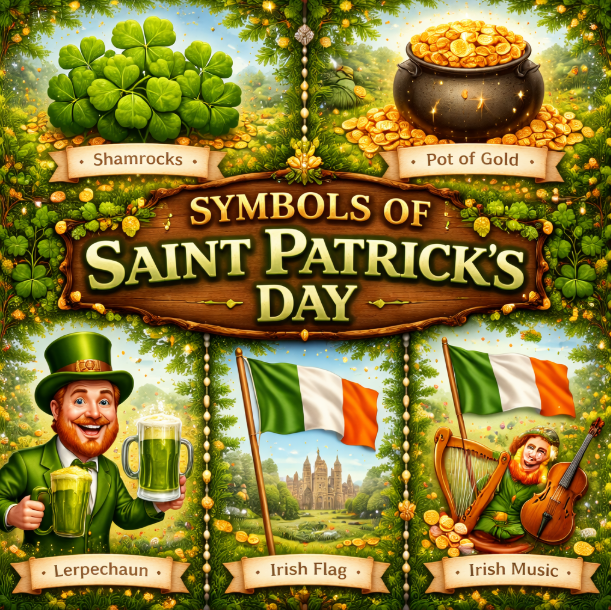
- Shamrock: The shamrock is one of the most recognizable symbols of Saint Patrick’s Day. According to tradition, Saint Patrick used the three-leaf clover to explain the concept of the Holy Trinity—Father, Son, and Holy Spirit—while teaching Christianity in Ireland. Whether or not the story is historically verified, the shamrock eventually became a national symbol of Ireland and a key emblem of the holiday.
- Leprechauns: Leprechauns are mischievous figures from Irish folklore, often depicted as small bearded men dressed in green coats and hats. According to legend, these magical creatures guard hidden treasures and are known for their playful tricks. Over time, leprechauns became a fun and whimsical part of Saint Patrick’s Day imagery.
- Pot of Gold: Another symbol tied to leprechaun folklore is the pot of gold at the end of a rainbow. The story suggests that leprechauns hide their treasure in secret places, and finding the pot of gold requires both luck and persistence. Today, the image is commonly used in decorations and festive designs associated with the holiday.
- Irish Harp: The harp is one of Ireland’s oldest national symbols and has long represented Irish heritage and culture. It appears on official government seals and is also widely used in traditional Irish music. During Saint Patrick’s Day celebrations, the harp symbolizes the country’s rich artistic and cultural traditions.
Together, these symbols help bring the spirit of Saint Patrick’s Day to life, blending historical meaning with folklore and festive imagination.
Fun Facts About Saint Patrick’s Day
Saint Patrick’s Day is filled with interesting history and surprising traditions that many people may not know. Here are a few fun facts about this globally celebrated holiday:
- The first Saint Patrick’s Day parade was held in New York City in 1762, organized by Irish soldiers serving in the British army.
- Blue was originally associated with Saint Patrick, not green. The shift toward green happened later as Irish nationalism and the shamrock symbol became more prominent.
- Chicago has been dyeing its river green since 1962, a tradition that has become one of the most famous visual symbols of the holiday.
- More than 70 million people worldwide claim Irish ancestry, helping explain why the holiday is celebrated far beyond Ireland.
- Over 13 million pints of Guinness are consumed globally on Saint Patrick’s Day each year.
- Saint Patrick wasn’t originally Irish—he was born in Roman Britain before being brought to Ireland as a captive.
Today, the holiday continues to grow in popularity, with celebrations taking place in cities, communities, and organizations around the world.

Celebrating Saint Patrick’s Day at Work
Saint Patrick’s Day isn’t only celebrated in public festivals and parades—it has also become a popular occasion for workplace celebrations and team activities. Many organizations use cultural holidays as an opportunity to create engaging moments for employees, strengthen team connections, and bring a sense of fun to the workday.
Simple activities such as wearing green, hosting themed office lunches, sharing quotes, or organizing small team gatherings can make the day more festive. Some companies also arrange trivia games about Irish culture, decorate shared spaces with shamrocks and green accents, or encourage employees to share traditional Irish recipes and music.
For distributed or remote teams, celebrations can take different forms. Organizations may send themed gift boxes, festive treats, or branded merchandise that allow employees to participate in the occasion even if they are working from different locations.
Platforms like SwagMagic help companies create and deliver customized swag, branded merchandise, and curated gift kits that make workplace celebrations more engaging. Whether it’s sending green-themed swag items, festive accessories, or small appreciation gifts, these thoughtful touches can help teams feel included in global cultural moments.

SwagMagic: Your Corporate Gifting Partner
Saint Patrick’s Day is celebrated not only in cities and public festivals but also within workplaces and organizations around the world. Many companies mark the occasion with themed activities, team events, or festive gifts that help employees connect and celebrate together.
With solutions like SwagMagic’s corporate swag and gifting platform, businesses can easily create memorable experiences through branded merchandise, curated gift boxes, and global fulfillment—making cultural celebrations like Saint Patrick’s Day even more meaningful for teams everywhere.